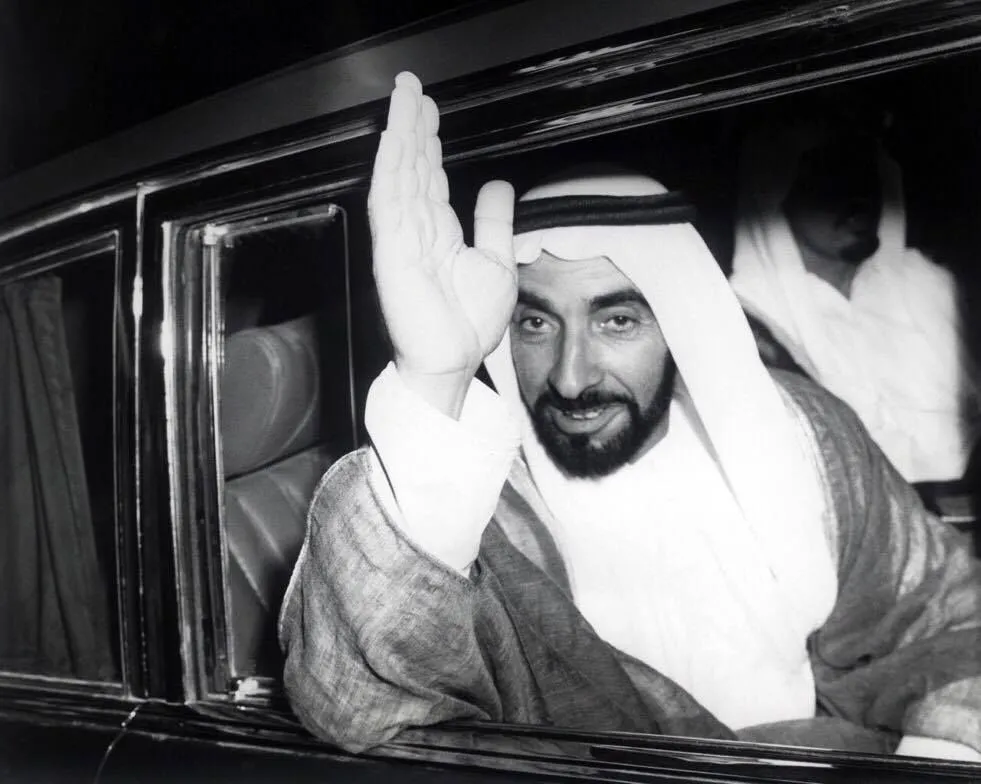
Sheikh Zayed bin Sultan Al Nahyan (1971–2004)

seaflog.com – Sheikh Zayed bin Sultan Al Nahyan, the founder and first president of the United Arab Emirates (UAE), is widely regarded as one of the most transformative leaders in the modern history of the Middle East. His leadership was pivotal in unifying the seven emirates that make up the UAE and in shaping the country into a prosperous, stable, and influential regional power. Known for his wisdom, vision, and commitment to progress, Sheikh Zayed left an indelible legacy that continues to influence the UAE’s development and international stature.

Early Life and Background

Born on May 6, 1918, in the city of Al Ain, Sheikh Zayed was the son of Sultan bin Zayed Al Nahyan, the ruler of the Emirate of Abu Dhabi. He grew up in the desert, learning the values of leadership, self-reliance, and generosity from his father and grandfather. From a young age, Sheikh Zayed developed a deep understanding of the challenges faced by the Bedouin people and the importance of unity in overcoming them.

Sheikh Zayed was educated locally and also spent time in the desert, where he observed the conditions of his people and the harshness of life in the region. His early years instilled in him a sense of responsibility and a commitment to improving the lives of his people.

Rise to Leadership

In 1946, Sheikh Zayed was appointed as the ruler’s representative in the Eastern Region of Abu Dhabi, a position that gave him the opportunity to gain firsthand experience in governance and administration. During this time, he implemented various reforms aimed at improving the welfare of the people, including the construction of infrastructure, schools, and healthcare facilities. His efforts to modernize Abu Dhabi laid the foundation for the prosperity that would follow.

In 1966, following the death of his brother, Sheikh Shakhbut bin Sultan Al Nahyan, Sheikh Zayed became the ruler of Abu Dhabi. He inherited a relatively underdeveloped emirate, with limited infrastructure and few resources other than oil. Despite this, Sheikh Zayed immediately set about transforming the emirate, using the newfound oil wealth to build the foundations for future prosperity. His leadership was marked by a focus on education, healthcare, and social development, which would later become key aspects of his presidency.

Founding the United Arab Emirates

The most significant achievement of Sheikh Zayed’s reign was the unification of the seven emirates into the United Arab Emirates (UAE) on December 2, 1971. This historic moment came after the British withdrawal from the region, which left the smaller emirates without a formal security umbrella. Sheikh Zayed’s vision for a united country was instrumental in overcoming regional rivalries and political differences to establish a strong, cohesive union.

Sheikh Zayed, who became the first president of the UAE, played a central role in the formation of the country. He fostered a sense of national identity and unity among the emirates, emphasizing cooperation and mutual respect. The UAE was officially established on December 2, 1971, with the seven emirates—Abu Dhabi, Dubai, Sharjah, Ajman, Umm Al-Quwain, Fujairah, and later Ras Al Khaimah—agreeing to form a federation under Sheikh Zayed’s leadership.

This union was based on a framework of shared governance, with each emirate retaining a degree of autonomy. However, under Sheikh Zayed’s presidency, the UAE became a unified, progressive state with a central government that prioritized development, modernization, and stability.

Visionary Leadership and Development

Sheikh Zayed’s reign was marked by visionary leadership and a strong commitment to the development of the UAE. With the discovery of vast oil reserves, Sheikh Zayed understood the potential of oil wealth to transform the country. However, his leadership was defined by a balanced approach, ensuring that the wealth generated from oil was used to modernize the country while preserving its cultural heritage and traditions.

Under Sheikh Zayed’s leadership, the UAE invested heavily in infrastructure, education, healthcare, and social welfare. The country experienced a dramatic transformation, with modern cities emerging from the desert, and the standard of living for Emiratis improved significantly. The UAE became known for its impressive infrastructure, including world-class roads, airports, ports, and hospitals.

Sheikh Zayed also focused on environmental conservation, recognizing the importance of sustainable development. He launched numerous initiatives aimed at protecting the environment, including large-scale tree planting projects and wildlife conservation efforts. His commitment to sustainability became one of the key pillars of his leadership.

Foreign Policy and Diplomacy

Sheikh Zayed’s foreign policy was characterized by pragmatism, moderation, and a commitment to regional stability. He worked tirelessly to promote peace in the Gulf region, maintaining a policy of neutrality and non-interference in conflicts. Under his leadership, the UAE played a significant role in regional and international diplomacy, fostering strong relations with neighboring countries and the wider international community.

In particular, Sheikh Zayed was a key player in the Gulf Cooperation Council (GCC), established in 1981, which sought to promote economic, political, and security cooperation among the Gulf states. His diplomacy extended beyond the Gulf region, and the UAE became an important player in global organizations such as the United Nations and the Arab League.

Sheikh Zayed was also known for his humanitarian efforts, both within the UAE and abroad. He provided aid to countries in need, particularly in the Arab world, Africa, and Asia. His generosity and commitment to humanitarian causes earned him widespread respect and admiration.

Legacy and Impact

Sheikh Zayed bin Sultan Al Nahyan passed away on November 2, 2004, after a long and illustrious reign. His legacy is one of unity, progress, and compassion. He is remembered as the founder of the UAE and the leader who guided the country through its formative years, transforming it from a collection of small, underdeveloped emirates into one of the most prosperous and influential nations in the world.

His vision for a modern, united, and progressive UAE continues to shape the country today. The leadership style he established—focused on balance, development, and cooperation—remains a hallmark of the UAE’s governance. Sheikh Zayed’s emphasis on education, healthcare, infrastructure, and environmental protection laid the foundation for the UAE’s continued success, and his humanitarian work continues to inspire leaders and citizens alike.

In recognition of his contributions, Sheikh Zayed is often referred to as the “Father of the Nation” in the UAE. His portrait is displayed prominently throughout the country, and his name is associated with the nation’s achievements and global stature.

Sultan Zayed’s enduring influence is evident in the UAE’s continued progress, as the country navigates the challenges of the 21st century while honoring the values and principles set forth by its founding father.

First African American Supreme Court Justice: Thurgood Marshall

seaflog.com – Thurgood Marshall, born Thoroughgood Marshall on July 2, 1908, in Baltimore, Maryland, was a pioneering American civil rights lawyer and the first African American Supreme Court Justice. His early life was marked by a strong influence from his father, who instilled in him the importance of standing up for his beliefs and pursuing a career in law.

Marshall attended Frederick Douglass High School in Baltimore, where he developed a keen interest in debate and memorized parts of the U.S. Constitution as a punishment for misbehaving in class. He went on to study at Lincoln University in Pennsylvania, graduating with honors in 1930. His classmates included future civil rights leaders such as Langston Hughes and Kwame Nkrumah.

Marshall’s legal education began at Howard University School of Law in Washington, D.C., where he graduated first in his class in 1933. At Howard, he was heavily influenced by Charles Hamilton Houston, a prominent civil rights lawyer and Dean of the law school, who taught him the importance of using the law as a tool for social change.

Career with the NAACP

After graduating from law school, Marshall began his legal career with the NAACP (National Association for the Advancement of Colored People) in 1936. He quickly rose to the position of chief counsel, where he was instrumental in developing and executing the legal strategy to dismantle institutionalized segregation in the United States.

Marshall’s most renowned case was Brown v. Board of Education of Topeka (1954), where he argued that segregation in public schools violated the Equal Protection Clause of the 14th Amendment. The Supreme Court’s unanimous decision overturned the “separate but equal” doctrine established by Plessy v. Ferguson in 1896, declaring that “separate educational facilities are inherently unequal.” This landmark decision was a monumental victory for the civil rights movement, paving the way for the desegregation of public schools across the United States.

Other notable cases Marshall argued include Smith v. Allwright (1944), which overturned the Texas state law that authorized white primaries, effectively disenfranchising African American voters, and Shelley v. Kraemer (1948), which ruled that courts could not enforce racial covenants on real estate.

Judicial and Supreme Court Career

In 1961, President John F. Kennedy appointed Marshall to the U.S. Court of Appeals for the Second Circuit. Despite opposition from Southern senators, he was confirmed and served on the court until 1965. In 1965, President Lyndon B. Johnson appointed him as Solicitor General of the United States, where he won 14 of the 19 cases he argued before the Supreme Court.

In 1967, President Johnson nominated Marshall to the Supreme Court, and he was confirmed by the Senate, making him the first African American Supreme Court Justice. During his 24-year tenure on the Court, Marshall was a steadfast advocate for individual rights and equality. He consistently supported decisions that expanded civil rights, opposed the death penalty, and defended the rights of criminal defendants.

Legacy

Thurgood Marshall retired from the Supreme Court in 1991 and passed away on January 24, 1993. His legacy is profound, as he played a crucial role in the civil rights movement and the fight against racial injustice. His work laid the foundation for significant legal and social changes in the United States, and he remains an enduring symbol of the quest for equality and justice.

Thurgood Marshall’s life and career were marked by significant achievements and substantial contributions to the battle against racial injustice and inequality. His relentless efforts in advancing civil rights and his pioneering role as the first African American Supreme Court Justice have left an indelible mark on American legal history.

Blushing Beginnings: Our First Date Story

seaflog.com – Our first date was a whirlwind of emotions, a perfect blend of nervous anticipation and the thrill of new possibilities. It was a crisp autumn evening, the kind where the air carries a hint of excitement and the promise of something magical. I remember the way my heart raced as I got ready, each outfit change reflecting my inner turmoil of wanting to make the perfect first impression.

The Moment of Truth

The moment I saw you waiting at the café, a warm smile lighting up your face, my nerves melted away. There was an immediate connection, a spark that ignited the moment our eyes met. We chose a cozy corner, the soft hum of conversations around us creating an intimate bubble where it felt like we were the only two people in the world.

Navigating the Maze of First Impressions

First dates are a delicate dance of getting to know each other, a maze of first impressions where every word and gesture is imbued with meaning. We talked about everything and nothing, from our favorite books to our dreams for the future. The conversation flowed effortlessly, each of us eager to peel back the layers and discover the person beneath.

A Walk to Remember

As the evening grew darker, we decided to take a walk, the city lights guiding our path. It was during this walk that I realized how comfortable I felt in your presence, how easily you made me laugh. We shared stories of our past, our failures, and our triumphs, and with each step, our connection deepened.

The Blush of New Love

The blush of new love was upon us, a rosy hue that colored our cheeks and warmed our hearts. It was the kind of feeling that makes you want to hold on to every moment, to savor every word and every laugh. As we said our goodbyes, the promise of a second date hanging in the air, I knew that this was just the beginning of something beautiful.

Reflections on a Perfect Evening

Looking back, our first date was more than just a meeting of two people. It was the beginning of a journey, a story that we would write together, one chapter at a time. It was a reminder that sometimes, all it takes is a single evening to change the course of your life. And as I drift off to sleep, the memories of that perfect evening still bring a smile to my face, a blush to my cheeks, and a warmth to my heart.

The Magic of New Encounters: The First Touch

seaflog.com – In the tapestry of human experience, few moments are as potent as the first encounter with something new. Whether it’s the initial meeting with a person who will become a lifelong friend, the discovery of a place that feels like home, or the introduction to an idea that changes the course of one’s life, these first touches hold a special place in our memories. They are the beginnings of stories, the seeds of relationships, and the catalysts for personal growth.

The Power of First Impressions

First encounters are powerful because they are often unfiltered and untainted by preconceived notions. They are pure, raw experiences that can leave a lasting impression. The way something is introduced to us can shape our perception of it for years to come. This is why first impressions are so crucial in personal and professional settings alike. They set the stage for all future interactions.

The Role of Curiosity

Curiosity is the engine that drives us towards new encounters. It is the desire to explore, to understand, and to experience the unknown. Without curiosity, we would be content with the familiar, and the magic of new encounters would be lost. It is our innate sense of wonder that propels us forward, encouraging us to reach out and touch the world around us.

The Fear of the Unknown

However, the allure of new encounters is often tempered by fear. The unknown can be intimidating, and the prospect of stepping into the unfamiliar can be daunting. Yet, it is in overcoming this fear that we find the greatest rewards. Each new encounter is an opportunity to expand our horizons, to challenge our beliefs, and to grow as individuals.

The Impact of Technology

In the digital age, the nature of new encounters has evolved. Technology has made it possible to connect with people and ideas from all corners of the globe. Social media, online communities, and virtual reality have redefined what it means to have a first encounter. While these platforms offer unprecedented access to new experiences, they also remind us of the value of genuine, face-to-face interactions.

Cultivating the Magic

To cultivate the magic of new encounters, we must remain open and receptive. We must be willing to step outside our comfort zones and embrace the unfamiliar. By doing so, we not only enrich our own lives but also contribute to the rich tapestry of human connection.

Conclusion

The first touch is a moment of pure potential. It is a chance to start anew, to discover, and to be discovered. In a world that is constantly changing, these moments of connection are what ground us, inspire us, and ultimately, define us. Let us cherish the magic of new encounters and the endless possibilities they hold.